
Shunde Wang:Climate Change Governance and Youth Climate Change Engagement
Introduction
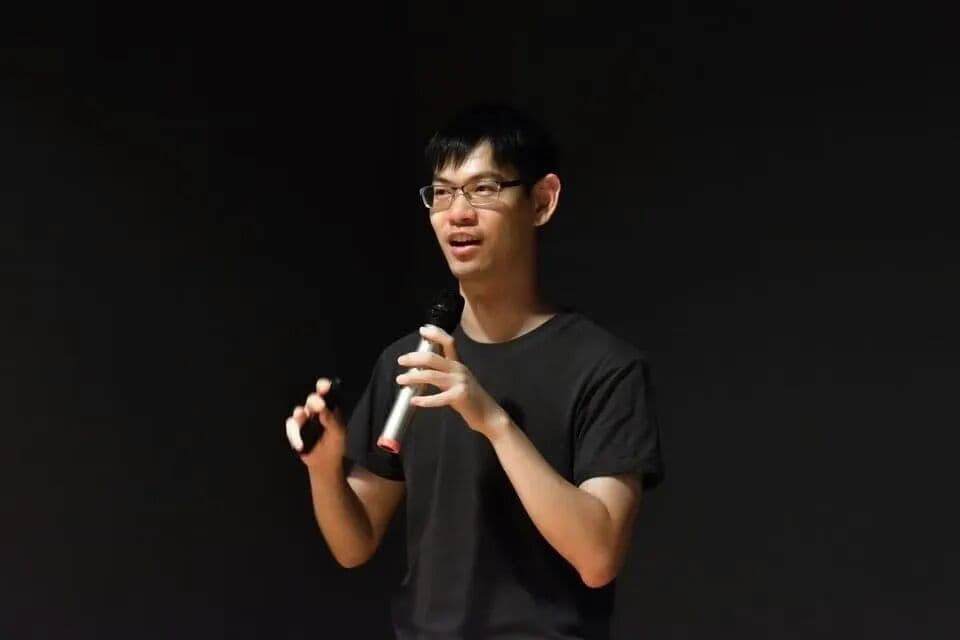
On August 3, 2025, as part of the “Future Anthropologists” online salon series, young researcher Wang Shunde from Taiwan, China, delivered a lecture titled “Climate Governance and Youth Participation.”
Wang Shunde holds a Master’s degree in Geography from University College London and a Master’s degree in Plant Biology from National Taiwan University. He is a recipient of the Chevening Scholarship awarded by the UK Foreign, Commonwealth & Development Office (FCDO). He is currently a circular economy researcher and climate policy consultant in Taiwan, China, and has worked with numerous NGOs. He has long been involved in youth climate initiatives, grassroots mobilization, and sustainability practices in climate-related exhibitions and museums.
Drawing on his academic training and extensive professional experience, his lecture integrated research and practice to share insights on climate change, governance mechanisms, and the role of youth in climate action.
1. The Nature of Climate Change: From Nature to the Governance of Human Behavior
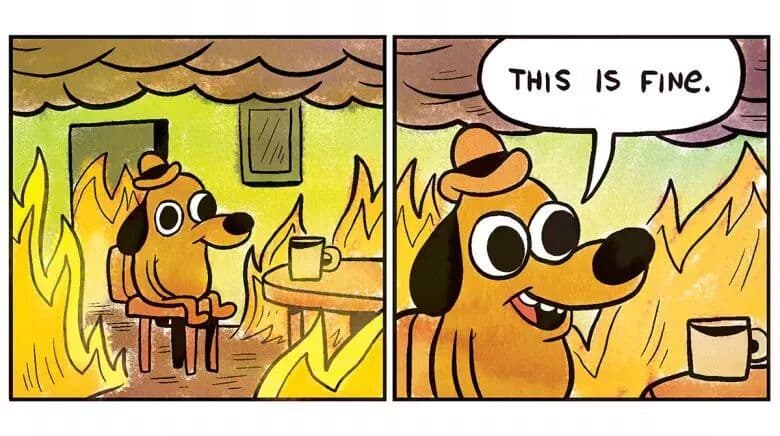
The lecture opened with a cartoon of a dog calmly drinking coffee in a burning house, symbolizing humanity’s indifference toward the climate crisis. It emphasized that climate governance is not merely a technical issue, but an anthropological question involving culture, power, and social justice.
Wang Shunde pointed out that the core of climate change lies in greenhouse gas emissions, whose root cause is human activity. Since the Industrial Revolution, human actions have significantly increased carbon dioxide and other greenhouse gases, leading to global warming, rising sea levels, and more frequent extreme weather events. He stressed that climate change is borderless: emissions are not confined by geography, and the consequences of climate disasters are borne by all humanity. This characteristic makes climate governance not only a natural science problem, but also a complex issue of managing human behavior.
Climate governance strategies are generally divided into two categories: mitigation and adaptation. Mitigation controls the sources of emissions by reducing greenhouse gases, for example through promoting clean energy or optimizing industrial processes. Adaptation focuses on coping with impacts that have already occurred, such as strengthening healthcare systems, flood control infrastructure, or food security.
Wang referred to the Stockholm research framework of the “Nine Planetary Boundaries,” noting that climate change not only raises temperatures but also triggers land degradation (such as forests turning into wasteland), water pollution, and ocean acidification. These risks demand global cooperation, yet existing governance mechanisms—constrained by nation-states and corporate frameworks—often fail to adequately respond to the needs of local communities.
2. The Contribution of Anthropology: Revealing Power and Marginalized Voices
Wang Shunde argued that climate governance mechanisms often follow existing political structures, prioritizing major powers and economic efficiency while neglecting local communities and marginalized groups. This limitation leads to governance solutions that lack inclusiveness and struggle to address the complexity and diversity of climate change. He noted that this problem aligns closely with anthropology’s advocacy of “de-anthropocentrism.” Through its hallmark method of fieldwork, anthropology uncovers the perspectives of communities, individuals, and even non-human species, revealing structural inequalities in climate governance and providing theoretical and practical support for more just and inclusive systems.
Structural inequality is especially evident in global climate governance. For instance, negotiations under the UN Framework Convention on Climate Change (UNFCCC) involve nine stakeholder groups such as women, Indigenous peoples, children, youth, and local governments, yet their voices are often marginalized. Wealthy nations dominate agendas through economic and political power, while the needs of developing countries and small island states receive little attention. Pacific island nations, for example, face existential threats from sea-level rise, but exert minimal influence over global mitigation targets.
Through long-term fieldwork, anthropologists enter marginalized communities and document their ecological knowledge, cultural practices, and coping strategies. Studies of Indigenous communities show that traditional agriculture and resource management often demonstrate strong adaptability to environmental change, yet such knowledge is frequently ignored by modern governance mechanisms. Anthropology not only exposes power asymmetries, but also offers policymakers alternatives grounded in local experience.
Wang further emphasized that anthropology provides unique perspectives for understanding social complexity in large-scale climate change. Conventional governance favors technical solutions such as carbon capture or renewable energy investment, but these often overlook sociocultural dimensions. From a de-anthropocentric view, anthropology challenges human-centered development models and calls for rethinking human–nature relations. By examining how communities use rituals and traditional knowledge to respond to environmental change, anthropology reveals how cultural practices enhance resilience. Climate governance, therefore, should not focus solely on technical or economic indicators, but integrate local culture and ecological wisdom to achieve sustainable transformation.
3. Levels of Governance: Power Games from Global to Local
Wang Shunde systematically analyzed four levels of climate governance and the limitations of relying on existing political structures.
Global Governance
Using the UNFCCC and the Paris Agreement as examples, he explained that UNFCCC negotiations set national emission targets but are heavily influenced by major powers, limiting enforcement. The Paris Agreement relies on voluntary Nationally Determined Contributions (NDCs), which lack binding force and therefore have limited effectiveness.
Regional Governance
The European Union legally requires member states to reach carbon neutrality by 2050, with penalties for noncompliance. Caribbean small island states coordinate responses to sea-level rise. Regional governance is effective in resource coordination, but must balance conflicts of interest among members.
National Governance
The UK promotes carbon neutrality through sectoral targets (transport, agriculture, housing), while China implements its 2060 carbon neutrality goal at the provincial level. These approaches reflect structural differences: the UK organizes by industry, China by territory.
Local Governance
The International Federation of Red Cross and Red Crescent Societies designates the second Saturday of September as World First Aid Day to promote preparedness.
At the municipal level, policies such as New Taipei City’s Youth Committee attempt to incorporate youth voices, but participation is often symbolic and limited in impact.
Wang noted that all existing climate governance mechanisms are human-made and follow established political structures, leaving room for improvement. These systems often ignore or sacrifice certain groups, highlighting challenges of fairness in governance.
4. Case Studies: Fairness Controversies in Governance
Wang analyzed three cases to illustrate fairness issues in climate governance.
Shared Socioeconomic Pathways (SSPs)
SSPs are frameworks used by the IPCC to project future climate scenarios, describing different development paths such as low-consumption lifestyles, technology-driven high-emission models, and free-market competition. Each pathway affects capitalists, laborers, and vulnerable groups differently, raising fairness concerns. Wang emphasized that policy design must integrate social justice, especially the unequal risks borne by marginalized groups during climate transitions.
London’s Ultra Low Emission Zone (ULEZ)
ULEZ charges high-emission vehicles entering central London to reduce air pollution. Although seemingly fair, it disproportionately impacts low-income groups who often live in suburbs and rely on older vehicles. The policy increases their financial burden, revealing hidden injustice in climate policy design and implementation.
EU Carbon Border Adjustment Mechanism (CBAM)
CBAM, often called a “carbon tariff,” charges imported goods for embedded emissions to protect the EU’s low-carbon industries. However, it may impose heavier burdens on developing countries exporting carbon-intensive goods. Many low-carbon products demanded by the EU are actually produced in the Global South, where environmental costs are borne. CBAM exposes structural inequality and justice disputes in North–South economic relations.
These cases show that climate policies, while pursuing ecological goals, often sacrifice vulnerable groups and may intensify existing inequalities. Anthropology’s value lies in entering micro-level realities, capturing voices hidden by mainstream narratives, and revealing the human costs behind policy. Truly effective and just climate governance cannot rely solely on technical paths and market mechanisms; it must integrate multicultural perspectives and ethical considerations of social justice, moving toward more inclusive and responsive governance models.
5. Youth Participation: From Passive Notification to Deliberative Democracy
Wang Shunde argues that youth participation in climate governance can be understood as three progressive levels: inform, engage, and deliberate. He explains these stages through the analogy of family decision-making.
At the inform level, participation resembles parents unilaterally announcing arrangements to their children, where youth merely receive information passively. The engage level allows young people to express opinions within a limited scope, yet decision-making power remains in the hands of authorities. By contrast, deliberation represents deliberative democracy, in which equal consultation grants youth substantive influence over policy outcomes.
This tiered framework reveals both the current limitations and future potential of youth participation in climate governance, emphasizing the transformation from one-way information delivery toward deeper, negotiated forms of collaboration.
To illustrate deliberative democracy in practice, Wang cites the UK’s Climate Assembly UK. This mechanism selects 100 representative citizens through scientific sampling to reflect the national population in terms of gender, ethnicity, age, and education. Over six months of policy learning and discussion, participants study government climate policies and consult with stakeholders from the oil industry, clean-energy sectors, and environmental organizations, eventually producing recommendations for Parliament.
Although technical terminology such as carbon quotas and socioeconomic pathways can pose comprehension barriers for non-experts, this model demonstrates greater inclusiveness and representativeness than traditional parliamentary voting. It allows ordinary citizens to engage with complex climate issues through structured deliberation, integrating diverse perspectives into policymaking and compensating for the concentration of power among political elites.
Wang further notes that deliberative democracy has the potential to dismantle hierarchical governance structures and provide marginalized groups, including youth, with genuine platforms for voice, though its implementation faces multiple challenges.
6. The Dilemmas of Youth Roles
As primary stakeholders and long-term victims of climate change, young people confront worsening environments, economic pressures, and food security risks. Yet their role in climate governance is frequently marginalized. Wang observes that many youths experience a sharp gap between social expectations and lived realities after finishing school and entering the workforce. This gap stems not only from economic uncertainty but also from deep anxiety about environmental futures. Extreme weather, resource scarcity, and geopolitical tensions intensify concerns about whether young people can secure stable lives in an increasingly fragile world.
Despite this, youth are often framed merely as the “leaders of tomorrow,” while their present participation remains symbolic. For example, local governments in Taiwan have established youth councils to provide channels for expression, but these mechanisms often remain procedural, with limited policy impact. Technical concepts such as Socioeconomic Pathways (SSPs) or carbon intensity further raise participation thresholds. Meanwhile, policy meetings frequently conflict with academic or work schedules, constraining youth engagement. Lacking professional expertise or institutional resources, many young people struggle to speak effectively in high-level negotiations.
These structural barriers weaken motivation and systematically exclude youth perspectives from governance processes, highlighting deficiencies in inclusiveness within climate policymaking.
Youth Participation Potential
To address youth marginalization, Wang emphasizes anthropology as a key pathway for enhancing participation. Through ethnographic fieldwork, anthropologists enter communities to document the needs of youth, Indigenous groups, and other marginalized populations, integrating these voices into policymaking and compensating for institutional blind spots.
He introduces Taiwan’s climate-themed board game “Turning the Tide” (翻云覆雨手) as an example. By using interactive and playful formats, complex climate issues are linked to everyday youth experiences, lowering participation barriers while stimulating interest and action. Such innovations not only improve understanding of climate impacts but also cultivate policy awareness and critical thinking through simulated decision-making.
Wang argues that youth participation should move gradually from inform toward engage and finally deliberate. Local governments can first ensure youth visibility in discussions, then expand their influence, ultimately approaching equal consultation models. Climate Assembly UK serves as a reference by institutionalizing long-term citizen deliberation through representative sampling.
He also calls for universities, think tanks, and civil organizations to strengthen cross-sector collaboration by developing workshops, community forums, and educational programs. These initiatives enhance youth capacity while advancing more inclusive and equitable climate governance by combining anthropology’s micro-level insights with macro-policy frameworks.
Discussion and Reflection: Local Needs and Public Participation Challenges
Gao Siyu, an undergraduate from Southwest Minzu University, shared a case from her hometown concerning extreme heat in Chongqing, where temperatures exceeded 40°C. She observed that the public tends to rely on air-conditioning or short-term avoidance rather than long-term governance responses. She cited resistance to paper-straw policies due to poor user experience as evidence of limited environmental awareness, questioning whether government communication models based on one-way notification can truly mobilize citizens.
Wang responded that anthropology excels at uncovering local needs, yet policymakers face constraints of time and resources. He proposed closer cooperation between anthropology, political science, and community work to identify common structural patterns in local demands and translate ethnographic insight into efficient policy recommendations.
Donnia from Guangzhou, representing an NGO, shared experiences using the “Turning the Tide” board game to promote youth engagement and collaborating with governments on carbon-trading projects. She noted that local policymakers often lack long-term climate vision. While cities like Xiamen show progress in waste classification, public awareness remains insufficient. She asked how activities could better enhance youth participation.
Wang replied with his experience in New Taipei City, where youth councils exist but deliver limited impact. He reiterated the importance of gradual empowerment, visibility, and cross-sector cooperation to broaden youth participation channels.
Anthropological Perspectives on Climate Governance
The moderator, Wang Xiyan, founder of Future Anthropologists, added that anthropology has evolved from de-Western-centrism toward de-anthropocentrism, offering distinctive perspectives for global challenges. In environmental and public-health crises, anthropology not only highlights inequality and marginalized needs but also reveals dynamic relations between humans, nature, and power structures. Ethnographic methods capture local knowledge and plural voices, providing evidence-based insights for policymaking.
Through public lectures and media dissemination, Future Anthropologists promotes anthropological thinking across industries under the mission: “You don’t need to be an anthropologist, but you can see the world like one.”
Wang concluded that climate change is an urgent emerging issue. Policymakers must balance universality, cost control, and local specificity, avoiding injustice during transitions. Climate governance operates across multiple scales and layers, posing major challenges. While ethnography captures local needs, it must coexist with practical constraints of efficiency and funding. Although no perfect solution yet exists, cross-disciplinary exploration continues to open more inclusive and proactive pathways toward the future.