
Zhiying Xiong:Making Coffee and Weaving Cultures: what are strangers doing in contemporary West Town
By Future Anthropologist
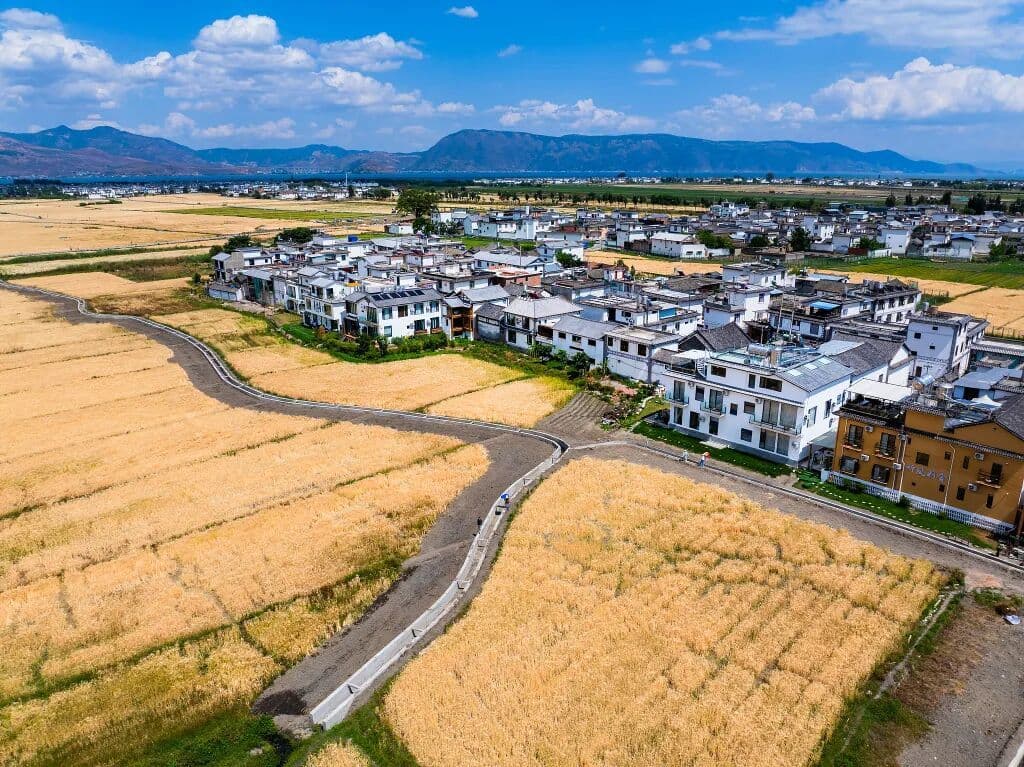
Xizhen is located between Cangshan Mountain and Erhai Lake in Dali, Yunnan. Historically, it served as the political and cultural center of the Dali Basin, making it a fertile ground for anthropology rich in deep historical layers and cultural intersections. This place has drawn the attention of anthropologists worldwide due to its unique social formations and vibrant multi-ethnic culture. From the merchant guild economy of the late Qing and Republican eras to the booming contemporary tourism industry, Xizhen is not only a hub of composite cultures but also a microcosm where the local and the global, tradition and modernity, the old and the new intertwine. Such dynamic social transformations provide rich fieldwork material for studying identity, migration, and cultural production.
Since entering the 21st century, Xizhen has transformed into a popular tourism destination. The frequent population flows and deep cultural mixing have made Xizhen a highly representative site for studying contemporary Chinese society. As a global beverage, the rise of coffee in contemporary Xizhen not only reflects waves of globalized consumption but also serves as a unique entry point for exploring cultural weaving and social interaction. In anthropological research, coffee transcends its mere material properties to become a bridge connecting “native” residents, tourists, and “strangers,” revealing the processes through which local society reshapes itself amid global flows. Xiong Zhiying’s lecture focuses on the contemporary coffee industry in Xizhen. Drawing on Georg Simmel’s theory of the “stranger” and Gilles Deleuze’s philosophy of becoming, it deeply analyzes how “strangers” develop dialogues between the local and the world through coffee production and cultural weaving, opening new possibilities for contemporary ethnographic writing.
**Xizhen: A Fertile Ground for Anthropological Research**
Thanks to its abundant historical and cultural resources, Xizhen has become a fertile field that continuously attracts scholarly attention in anthropology. This land has given rise to classic ethnographies such as Francis L.K. Hsu’s *Magic and Science in Western Yunnan* (1943) and *Under the Ancestors’ Shadow* (1948), as well as Liang Yongjia’s *The Hierarchy of Status* (2005). In addition, several important master’s and doctoral theses—such as Duan Weiju’s master’s thesis and Liu Zhongwei’s doctoral dissertation—are also highly noteworthy. During her 16-month fieldwork, Xiong Zhiying also encountered scholars from prestigious universities and research institutions in the United States and Japan who were studying local cultures such as tie-dye and “Raosanling” music. Her own research, however, centers on incoming “strangers,” analyzing their roles in the contemporary coffee industry in Xizhen and their impact on reshaping local culture.
**Reexamining the Concept of the “Stranger”**
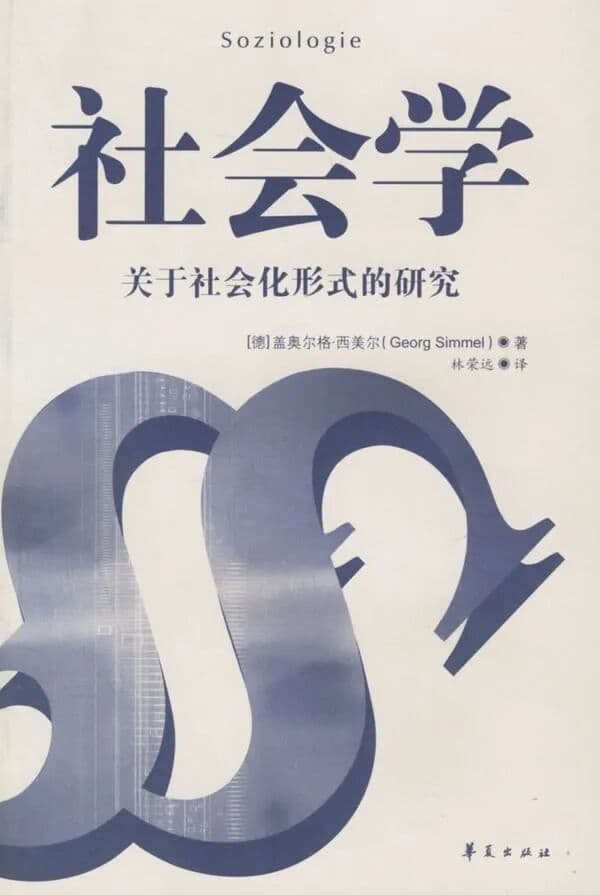
In his 1908 work *Sociology: Investigations on the Forms of Sociation*, Georg Simmel first conceptualized the “stranger,” defining it as a “potential wanderer who comes today and stays tomorrow.” The “stranger” differs from short-term tourists: spatially close to the group yet culturally somewhat distant, creating a unique social distance of “both near and far.” Simmel emphasized that the “stranger” is not an owner of the land nor bound by its relationships, and thus possesses freedom and objectivity. This enables the stranger to play a positive role through forms of sociation and exert beneficial effects on local society. However, traditional anthropological research (such as Malinowski’s fieldwork norms) has often focused on “native” inhabitants, overshadowing the significant influence of “strangers.” Xiong Zhiying argues that the “stranger” constitutes a key entry point for contemporary ethnographic writing.
The Generativity of Culture
The concept of culture in American anthropology takes as its intellectual foundation the German-style cultural idea represented by Johann Herder and others, was fully developed in the new four-field anthropology established by Franz Boas, and together with Edward Tylor’s classic definition of culture, has produced a profound influence on anthropological research around the world. The cultural concept of American anthropology emphasizes the continuity of “traditional patterns of behavior” and displays a clear ontological tendency. Xiong Zhiying draws on Gilles Deleuze’s philosophy of becoming to advocate that culture is “being-as-becoming,” stressing its dynamic quality and openness. Deleuze subverts the ontological viewpoint, holding that all things are becoming and that being itself is “being-as-becoming”; the meaning of culture is continuously reshaped through social interaction. Combining this with Simmel’s theory of forms of sociation, Xiong Zhiying points out that culture is not merely an accumulation of content, but rather the interaction and becoming of form and content. In contemporary Xizhen the “strangers,” through coffee making and cultural weaving, make manifest the generativity of culture and break through the binary oppositions of tradition and modernity, local and world, old and new.
The Social Composition of Xizhen
The social composition of contemporary Xizhen is mainly divided into three types. The first type is the “native” residents: since the modern period, native residents of Xizhen have continuously flowed out through business, study, and migrant work, forming the characteristic of an overseas Chinese hometown. During the period of the War of Resistance Against Japan, when Huazhong University was relocated to Xizhen, it increased their opportunities to receive higher education and further promoted population outflow. In recent years, ecological governance has caused villagers from nearby areas to enter Xizhen to engage in commercial activities or work, enriching the connotation of “local people.” The second type is tourists. In 1984 Dali became the first city in the region to open to foreign tourism, and since the 21st century Xizhen has also become a popular tourism destination. After 2017 the annual average number of tourists in Xizhen has remained above 200,000, far exceeding the local permanent population (about 4,000 people). The continuous influx of tourists has changed the social landscape of Xizhen and promoted the rise of new consumer cultures such as coffee. The third type is the “strangers,” that is, the “potential wanderers” who come from all over the world and reside long-term in Xizhen. These “strangers,” through their sustained experiences of mobility, develop a cosmopolitan vision and outlook, while at the same time showing great enthusiasm for and identification with local culture, which enables them, on the basis of “pursuing a better way of life,” to bring their strengths into play and develop their careers. These “strangers” have played a guiding and leading role in the emergence and development of the Xizhen coffee industry.
The Coffee Industry and Coffee Making in Xizhen
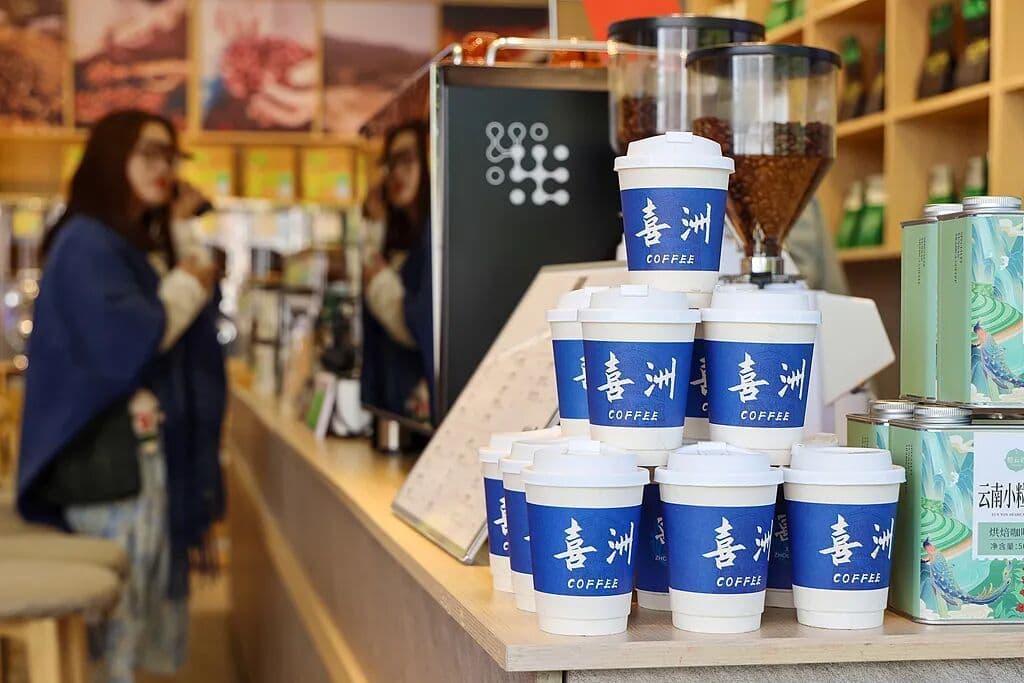
The coffee industry in Xizhen began in 2008 when Xilinyuan introduced freshly ground coffee, and has gone through developmental stages from non-professional to professionalized (starting from 2014) and then to post-professionalized (starting from 2020). “Strangers,” such as Taozi, the owner of Tianjiāfēi, and Peter, the owner of Peisuo’a, established the professional tone of the Xizhen coffee industry through their professional skills and ideas. In the post-professionalized period, competition among coffee shops shifted toward spatial creation and cultural experience; for example, Maitian Coffee attracted tourists with its rural landscape and achieved great success. As of August 2022, Xizhen had about 60 coffee spaces, with more than 100 professional practitioners, consuming several tons of coffee beans annually. The coffee industry in Xizhen emerged and developed against the background of the rise of the “third wave” in the global coffee industry, and has been deeply influenced by trends in the world coffee industry. During her fieldwork, Xiong Zhiying learned coffee techniques and worked as a barista at the counter for four and a half months, thereby gaining an alternative “insider’s perspective of the culture holder.” Taking latte art in espresso coffee and water flow control in pour-over coffee as examples, Xiong Zhiying re-recognizes coffee by introducing the “work of the hands” in coffee making, dispels Western imaginations of coffee, and thereby reveals the internal diversity and global commonality of coffee culture.
Cultural Weaving Centered on Coffee
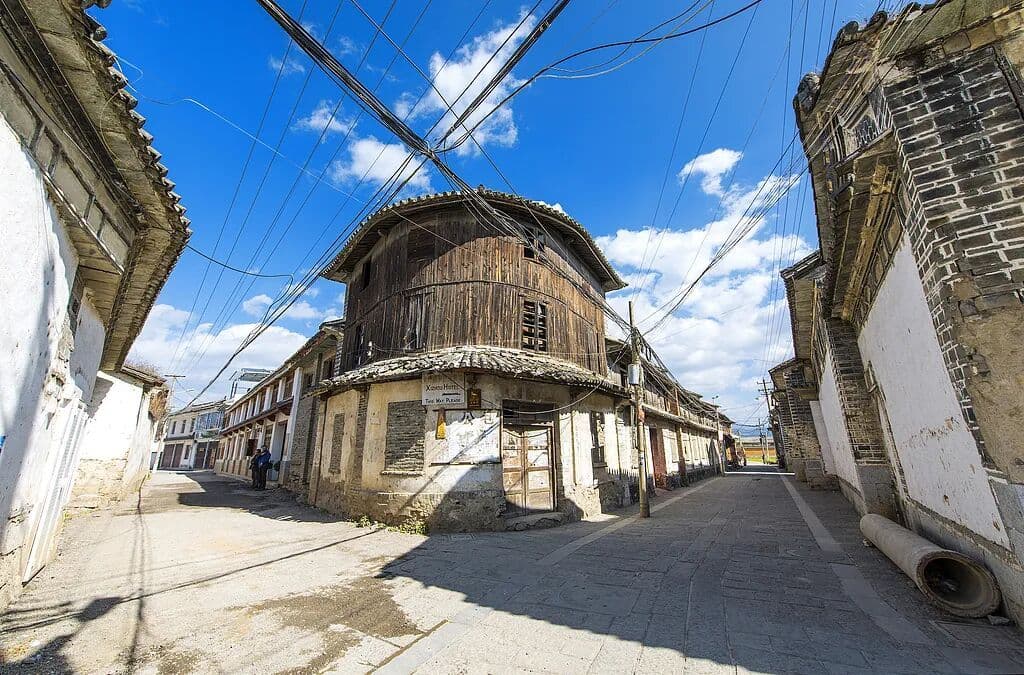
As a global beverage, coffee has been woven by “strangers” into local culture in contemporary Xizhen, with prominent manifestations in the following aspects: First, the fusion of tea and coffee. Xizhen traditionally centers on tea culture (such as Xiaguan tuocha and the Bai three-course tea), and coffee shops operated by “strangers” often provide tea beverages at the same time, attempting to bridge the relationship between tea and coffee and create cultural experiences that combine local and global characteristics. Second, spatial creation: coffee shops utilize Xizhen’s historical architecture (such as lofts and gardens in residential buildings) or old materials (such as bar counters made from door panels) to integrate traditional architectural elements into modern consumption scenes. Garden coffee shops particularly align with the traditional Xizhen people’s love for courtyards and flowers, endowing the space with new vitality. Third, the weaving of coffee with rural landscapes. “Strangers” combine coffee shops with rural landscapes, untying coffee from big cities and caffeine from a life of toil. This cultural weaving overturns the traditional Xizhen people’s conception of the status of agriculture and displays the contemporaneity of local culture. Fourth, the local fusion of art and culture: coffee shops hold various activities (such as street market flowing banquets, masquerade balls, outdoor weaving, etc.), combining local intangible heritage (such as jiama) with world culture, showing the interweaving of tradition and modernity, old and new.
“Strangers” and Contemporary Ethnographic
Writing “Strangers” in the Xizhen coffee industry demonstrate the generativity of culture and the contemporaneity of society. They generally possess higher education, a cosmopolitan vision, and enthusiasm for local culture, and through bringing their strengths into play to develop careers, they restructure local society. Coffee as a link connects “native” residents, tourists, and “strangers,” promoting social interaction forms such as counter teaching, social sharing, cooperative operation, and industry division of labor. In ethnographic writing, the perspective of “strangers” breaks through the traditional anthropological focus on “native” residents and responds to the mobility and diversity of contemporary society. Simmel’s “stranger” theory, particularly the connotations of its forms of sociation, provides an analytical framework that emphasizes the positive role of “strangers” as constituents within the group. Deleuze’s philosophy of becoming injects dynamicity into the concept of culture and challenges the ontological tendency of traditional cultural concepts. The case of the Xizhen coffee industry shows that “strangers,” through making coffee and weaving culture, not only enrich the connotations of local culture but also promote the unfolding of contemporary new cultural practices. This study advocates that contemporary ethnography should attempt to take “strangers” as an entry point, pay attention to their forms of sociation and cultural practices, in order to reveal the complexity and possibilities of Chinese society in the context of globalization.
In the discussion session, Wang Wenhuan, a graduate student from the Department of Anthropology at Xiamen University, was the first to raise her question. She is currently conducting fieldwork on coffee cultivation in the Nujiang Dam area of Baoshan, Yunnan, and has read Xiong Zhiying's paper and been inspired by it. Wang Wenhuan believes that the social life history of coffee from field to cup involves multiple actors such as farmers, middlemen, enterprises, baristas, and consumers, forming a complete industry chain. As a premium coffee production area in Yunnan, Baoshan Nujiang Dam sees farmers bound by land and unable to capture the premium from processing, roasting, and café consumption stages, facing economic difficulties. She also mentioned the reverse shaping of coffee on farmers' daily lives: although farmers are limited by land, coffee as a global commodity promotes new social relations, such as farmers discussing business and cooperation over coffee at night, attempting to break through the constraints of family economy. For example, farmers cooperate with educated relatives to plant coffee while also opening cafés, connecting with a broader world. Her questions first concern doubts about the choice of research topic: why choose coffee rather than more "indigenous" things like tie-dye or jiama for studying cultural weaving? How do baristas and consumers view the farmers at the production end? She believes this is important for understanding the connections in the industry chain.
In response, Xiong Zhiying first affirmed Wang Wenhuan's observations on coffee's reshaping of farmers' family relations (such as cooperation between fathers and sons, brothers), considering this to embody the significance of contemporary ethnography in revealing changes in social structure. He also pointed out the separation between origin and consumption sites in the coffee industry chain (e.g., Xizhen as consumption site, Baoshan as origin; Yunnan as origin, Beijing-Shanghai-Guangzhou-Shenzhen as consumption; Africa, Southeast Asia, Latin America as origin, Europe and North America as consumption). He mentioned Yemen's best coffee bean auctions as an attempt to enhance connections between consumers and growers by introducing farmer information. He also used the example of "Shanding No.1 Manor" to illustrate how "strangers" attempt to connect production and consumption ends through operating estates, demonstrating the role of "strangers" across the entire industry chain. In responding to the choice of topic, Xiong Zhiying said the selection of coffee was accidental; he discovered by chance that there were seven cafés within 100 meters in Xizhen, which showed its research value. He also mentioned the case of Japanese scholars studying tie-dye, noting that locals who successfully operate tie-dye businesses were often formerly "strangers" (such as those who drifted north or studied elsewhere before returning home), and their expanded vision and enhanced abilities drive the development of local culture, verifying the universality of the "stranger" perspective. On suggestions for fieldwork relations, he advocated that ethnographic researchers should aim to develop "friendship relations" with research subjects in the field, rather than the traditional anthropological fictive kinship (such as Morgan's adopted son model), using the identity of "stranger" to promote more open social interactions.
Tian Xiaolong, an undergraduate from Hubei Minzu University, was very curious about how to discover and establish connections between different scholars and their academic views during literature reading.
Xiong Zhiying believes that this ability has a great deal to do with the volume of reading; when the reading volume is large enough, these connections may naturally emerge. In addition, it may also relate to the method of reading literature. He suggests first determining the research theme, then conducting systematic reading based on the theme. For example, after determining the theme of "stranger," he sought out some of the latest studies on "stranger," and found that these studies always mention certain authors and works, so those works are classics and worth reading. Before deeply reading the literature on "stranger" studies, he did not even know of Margaret Wood, but related studies always mentioned her and her book The Stranger (1934), so he found and read the book, discovering that it was still very helpful to his research.
Yang Jingwen, a doctoral student from Beijing Normal University, paid attention to the leaps in Xiong Zhiying's research thinking and asked about the path of thought from coffee (thing) to society ("stranger") and then to culture (generativity). He believes Xiong Zhiying's research starts from coffee as a thing, combines new materialism, extends to society ("stranger," Simmel), and then to culture (Boas, Deleuze's philosophy of becoming), with a large span and not following the traditional anthropological path. He is curious whether this logic originates from fieldwork problems or literature review, and how to integrate such a broad theoretical framework.
Xiong Zhiying first acknowledged that the research span is large, and the leaps stem from literature read at different stages: early focus on literature related to coffee as a thing (such as Appadurai's "social life of things"), mid-stage inspired by Simmel's "stranger" concept to build an explanatory framework, later-stage deep into cultural concepts (Boas, Deleuze), forming a path from thing to society to culture. Xiong Zhiying explained that the title of his doctoral dissertation is "Self-Presentation in a Flowing World," centered on Arjun Appadurai's global scapes of flows and Erving Goffman's self-presentation, aiming to establish connections between things and society. The "stranger" concept gradually emerged as a theme in the field and was naturally deeply influenced by Simmel. Xiong Zhiying admitted the difficulty of integrating interdisciplinary theories, so it is currently hard to fully write all content into one article. He plans to unfold separate analyses through three articles (respectively from the angles of thing, society, and culture), and then synthesize after completion. He does not recommend imitating this leaping method, but believes that phased deep engagement with different theories helps enrich the research and ultimately achieve comprehensive explanation. The formation of the entire research path is both inspired by the field (such as the dense distribution of cafés sparking research interest) and propelled by literature reading, embodying the dynamic interaction between field and theory.
At the end of the lecture, Dr. Wang Xiyan, the initiator of the Future Anthropologist project, shared her reflections on listening to the lecture, combining domestic research and media content to discuss the inspiration of the "stranger" concept. She mentioned that previous domestic "stranger" studies she had read (such as those by Yan Fei and Du Yue at Tsinghua University) mostly focus on bottom-level migrant workers from small cities to Beijing-Shanghai-Guangzhou-Shenzhen, while Xiong Zhiying's research goes the opposite way, focusing on groups who received education in big cities like Beijing-Shanghai-Guangzhou and then return to Xizhen, showing the diversity of "stranger" identities. She also mentioned Yuan Changgeng's research on Dali's "farmers' clubs" in the Xiaohongshu program "Book Without Answers," pointing out that some people who have received higher education or even studied abroad, dissatisfied with urban life, move to Yunnan; they are not traditional farmers but intervene in the countryside as "strangers," attempting to reconnect self and society through local practices. This phenomenon also echoes Xiong Zhiying's research, together revealing how strangers reconstruct culture and identity in local society.
References Deleuze, 2016, Nietzsche and Philosophy, translated by Zhou Ying and Liu Yuning, Zhengzhou: Henan University Press. Liang Yongjia, 2005, The Hierarchy of Territory: Ritual and Culture in a Dali Village-Town, Beijing: Social Sciences Academic Press. Hsu, Francis L.K. 1943. Magic and Science in West Yunnan: The Problem of Introducing Scientific Medicine in a Rustic Community. New York: Institute of Pacific Relations. Hsu, Francis L.K. 1948. Under the Ancestors' Shadow: Chinese Culture and Personality. New York: Columbia University Press. Notar, Beth E. 2006. Displacing Desire: Travel and Popular Culture in China. Honolulu: University of Hawai'i Press. Simmel, Georg. 2009. Sociology: Inquiries into the Construction of Social Forms. Leiden: Brill.